
Tags
15 years old, 46%, 80s rich kid, angelsportion, aristotle, florida, interpreter, lutheran, Paul Éluard, review, rodin, russia, Salvadore Dalí, schumann, scotch, tamdhu, theodore dreiser, thoma, van gogh, whisky

Aristotle once summarized art’s aim. He noted that art’s essential goal is “to represent not the outward appearance of things, but their inward significance.” In other words, art interprets essence. It is its conduit. The materials and method comprise the vernacular. Skill arranges them. In the process, life’s invisibles become visible.
In this regard, Michelangelo could say, “I saw the angel in the marble and carved until I set him free.” Similarly, Rodin could reply, “I invent nothing. I rediscover.”
Not everyone can do this. Some can, but probably shouldn’t.
For example, I used to visit Russia. I speak very little Russian, and therefore, I require an interpreter. Understandably, the process is a nuanced one. An English sentence might need two in Russian and vice versa. However, when teaching, one-to-one literal interpretation is often preferable. Once, while teaching, I spoke several sentences before pausing to allow the interpreter to convert the concept. Saying nothing, she motioned for me to continue. I did, assuming she wanted a few more of the concept’s details before interpreting. I spoke a few more sentences before pausing again. She motioned again. I kept going. This back-and-forth lasted two or three minutes before I finally insisted that she interpret what had been said. She offered a single sentence and then nodded for me to proceed. When it came time to test the students’ understanding, the concept’s essence was, as expected, blurry.
In the art world, this is Salvadore Dalí.
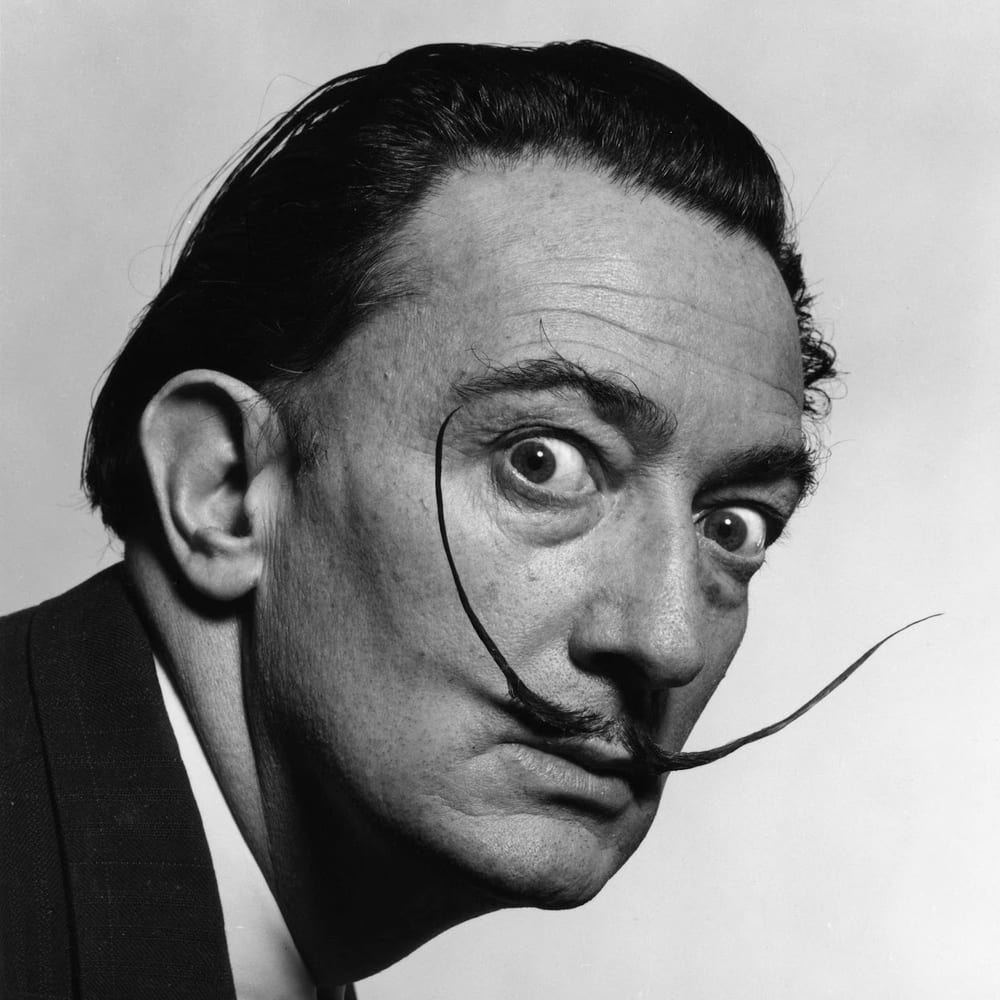
I and my family visited the Dalí Museum in St. Petersburg, Florida. Dalí is a Spanish painter best known for his bizarre surrealism. Having come face to face with many of his originals, I left the gallery glad that I’d seen them, ultimately admitting he was a man of great skill. Indeed, many of his pieces are extraordinary, proving a talent unavailable to most. His largest portrait, the 14 feet tall and nine feet wide “The Discovery of America by Christopher Columbus,” is absolutely astounding, rivaling some of history’s greats. Some of his smaller oil-on-canvas and burlap portraits are just as moving, if not breathtaking. His sculptures and jewelry designs are crisply enticing, too.
But I also left the gallery feeling as though Dalí was somewhat of a pretentious hack. The child of a well-to-do family in early twentieth-century Catalonia, I deduced him more the stereotypical rich kid from the 80s movies who demanded luxury and did what he wanted with other people’s things. For example, I learned that when visited by his friend and poet, Paul Éluard, he coveted Éluard’s wife, Gala. Eventually, she became his wife. What’s more, his infamous floral and fruit pieces are nothing more than prints from skilled but unknown artists he randomly graffitied. The originals were quite exquisitely done, that is, until Dalí discovered them and, in his boredom, decided to spice them up with child-like doodles that more than subtract from their beauty.
Schumann once scribbled, “To send light into the darkness of men’s hearts—such is the duty of the artist.” I know this may be offensive to the art weirdos out there, but with surrealistic portraits like “The Great Maturbator” and others exploring necrophilia, the best description I have for Dalí after leaving his gallery and learning about his life is that he had skill and means, but he lacked the human soul’s language. Taking mushrooms and then painting what you experienced is not a soulful revelation or a representation of inward significance. It’s a fever dream’s nonsense pitched toward human darkness. Perhaps worse, taking someone else’s work and drawing over it is by no means carrying forth on the shoulders of giants. It’s sitting on the giant’s shoulders and urinating. Again, Dalí seemed a little like a teenage rich kid in an 80s movie who drives and crashes his dad’s car without care or concern.
There are Dalí-like distilleries. I can think of a few. But then there are the incorruptible masters, the ones that understand whisky-making, much like art, as an opportunity to send light into darkness. They are precise with their materials and method, whispering alongside Van Gogh, who mused, “Great things are done by a series of small things brought together.”
Tamdhu is such a distillery, and its 15-year-old edition is one of its finer compilations.
The nose paints a colorful landscape of apple and plum trees coated by a cinnamon winter. The palate sees playful children carting chocolate-coated oak baskets filled with spiced red berries from another unseen orchard. The finish, pleasantly long, shows others roasting the berries, cinnamon apples, and plums, with the apples being the most preferred by the smiling characters.
If the Tamdhu 15-year-old edition were a painting, I’d hang it on my wall and drink in its interpretive grandeur daily. Although, I must admit I’m glad it isn’t in a frame on my wall but in a bottle on my shelf. In this form, it can be art’s reality of opportunity, once described by Theodore Dreiser as “the stored honey of the human soul.”
Indeed, it is that good.